Research
Dissertation Research
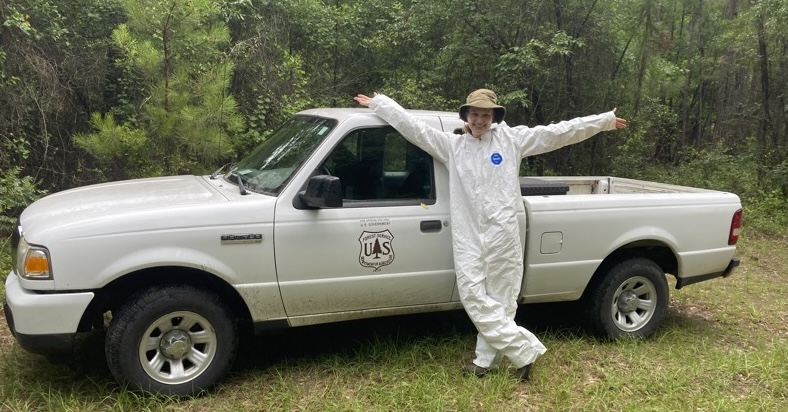
Most of my dissertation field research took place in the Corridor Project experimental landscapes at the Savannah River Site, SC, and I’m grateful to Team Corridor and the U.S. Forest Service for making it happen! Photo: Andrea Torres
Habitat specialization and edge effects of soil microbial communities in a fragmented landscape (Winfrey, Resasco & Fierer, 2025)
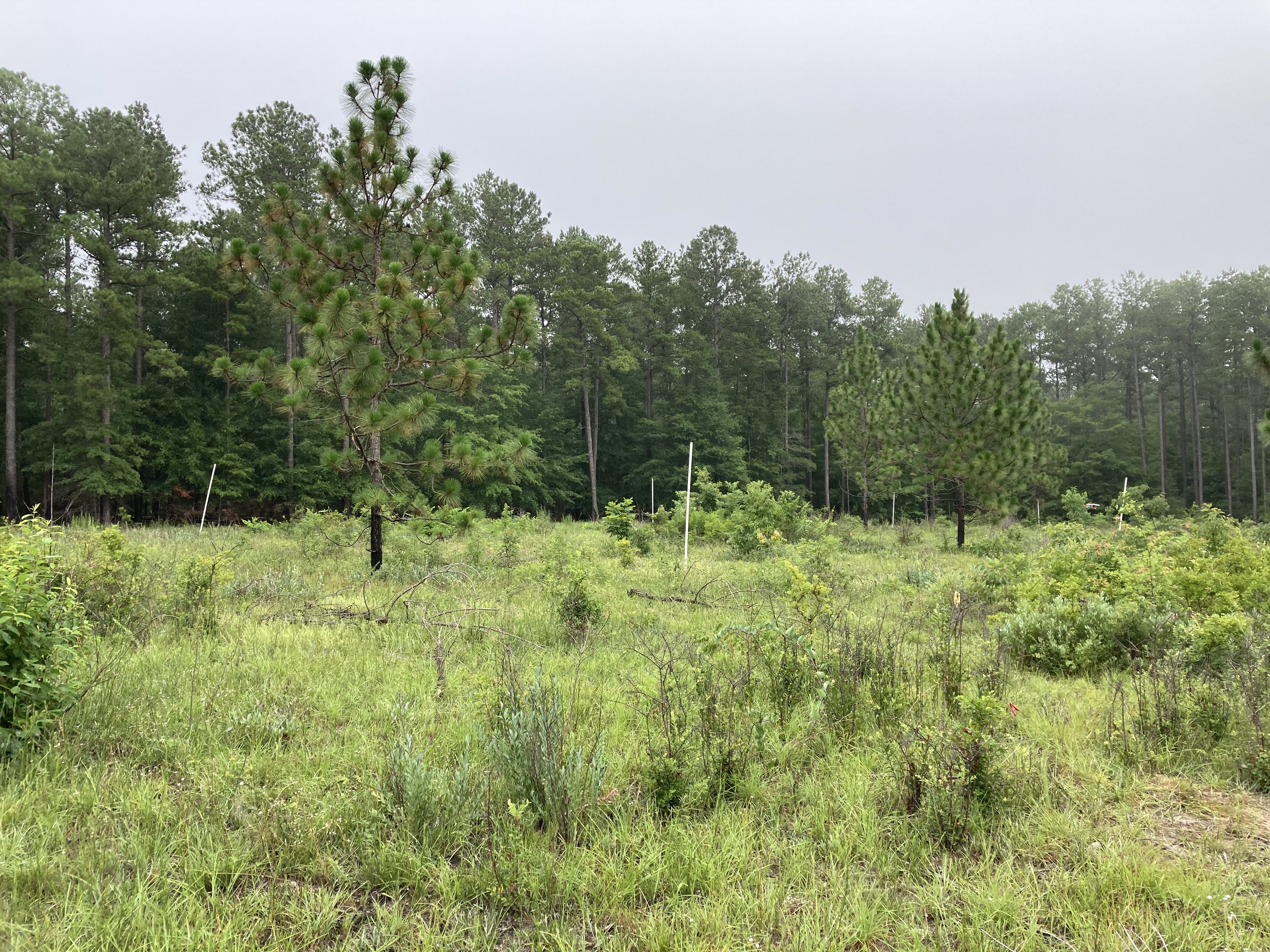
While edge effects caused by habitat fragmentation have been well documented in plants and animals, whether or not soil bacteria, archaea, and fungi exhibit edge effects is an open question. Given the central role of microorganisms as drivers of soil ecosystem services, examining the responses of soil microorganisms to edge effects is important initial step for understanding how soil functioning may be impacted by habitat fragmentation.
Motivated by this knowledge gap, we used 16S and ITS rRNA gene sequencing to survey the spatial distributions of soil bacteria, archaea, and fungi communities in replicate ~1 hectare open patches surrounded by forested plantation matrix in South Carolina, USA. We discovered that the greater the vegetation contrast between the patch and the matrix, the more pronounced was the microbial turnover across the edge and more distinct were patch and matrix communities. These observed edge effects were driven mostly by taxa that specialized in the open patch or the forested matrix; there were very few taxa that preferred edge habitat. We next explored if phylogeny or life history traits might distinguish taxa that responded to the edge from generalist taxa. We did not find support for our hypotheses that generalist taxa would be more likely to sporulate or have larger genomes (associated with greater metabolic versatility). However, we did find that Chloroflexi and arbuscular mycorrhizal fungi strongly preferred the open patch over matrix or edge habitat, suggesting that they may be particularly vulnerable to fragment edges.
See the ‘digest’ of this research that I wrote for Conservation Corridor!
The sources and traits of bacteria and fungi found in the near-surface atmosphere. (Winfrey, Socualaya-Torres, Resasco, & Fierer, 2026)
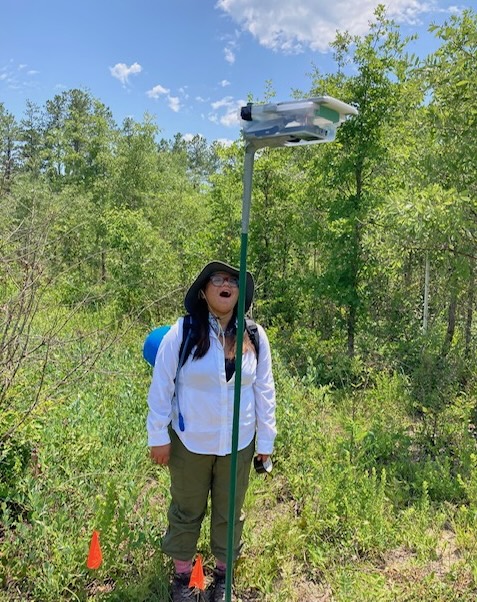
High UV, rapidly fluctuating temperatures, and few nutrients make the atmosphere a harsh place for microorganisms. Yet, diverse fungi, bacteria, archaea, and protists are found in the near-surface atmosphere (i.e., the ‘aeromicrobiome’), with transport through the atmosphere long hypothesized to explain the continental or even global ranges of some microbes.
This project asks three unresolved, key questions in aeromicrobiology, working at habitat boundaries (where savanna-like patches and a forest matrix meet) and a spatial scale of ~100 meters to investigate the influence of local plants and soils on the aeromicrobiome. A better understanding of the aeromicrobiome at ecosystem edges may lead to improved predictions for microbial dispersal and spillover in the context of widespread and increasing habitat fragmentation worldwide.
Questions I addressed in this project: (1) Is the plant community type important for driving differences in the aeromicrobiome at small scales? (2) Which, if any, microbes are shared between the air and local plants and soils? (3) Are there microbial traits that distinguish aerosolized microbes from those in the soil or plant source environments?
Want a quick overview of the project? Check out my 2025 CIRES Rendezvous
poster of this work here (I admit that the figures are prettier in the
final paper!):
 Open PDF
Assessing the diversity of soil prokaryotes capable of forming spores using a cultivation-independent approach. (in preparation)
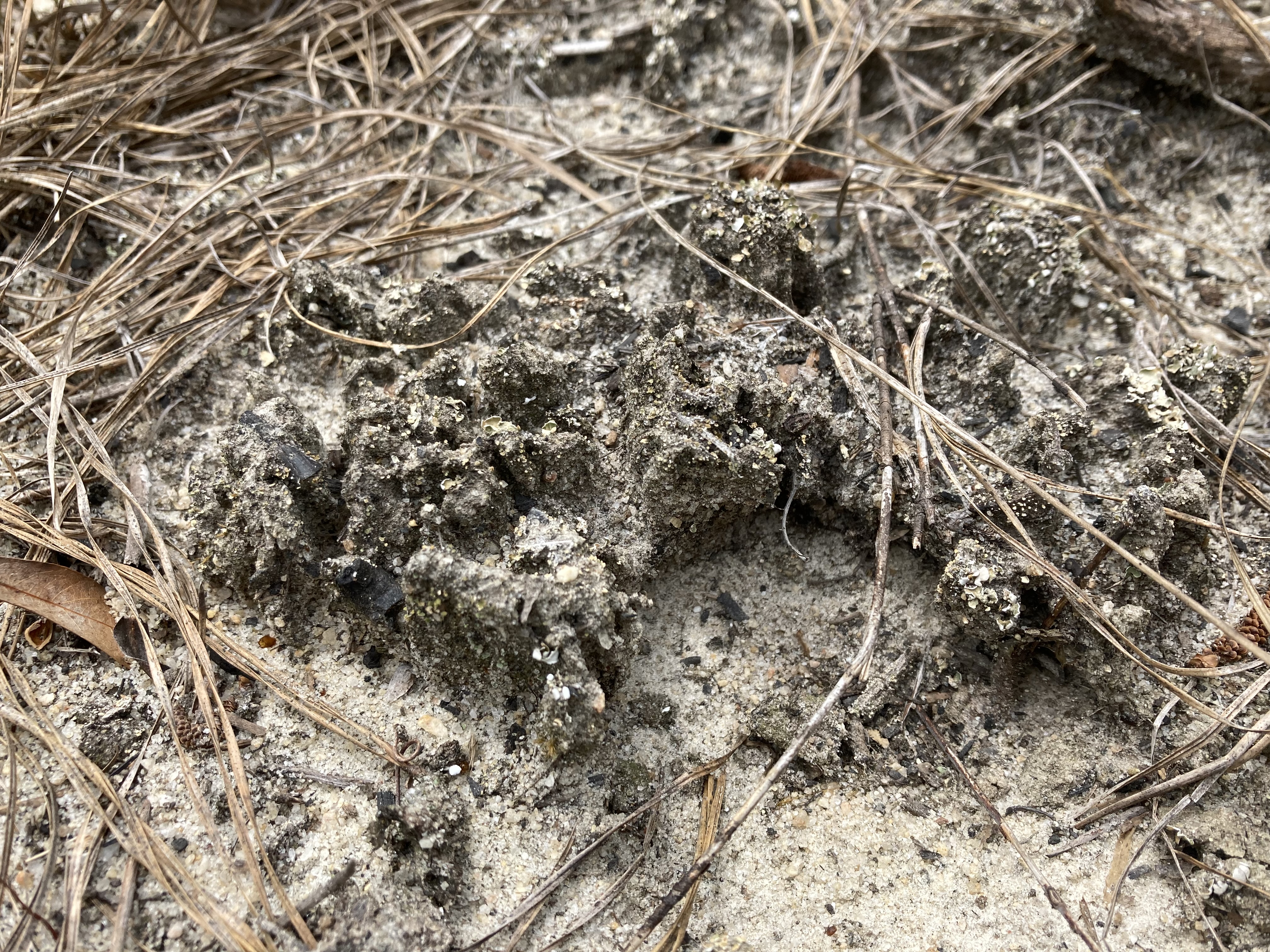
Environmental characteristics that shape bacterial and archaeal communities, such as pH, moisture, and the availability of carbon and nutrients, are highly patchy both temporally and spatially in soil. How do soil microbes survive harsh conditions where they live or survive the journey to patches of soil where conditions are better? Ample research has shown that some bacterial taxa armor themselves in tough spore-like structures in response to conditions unfavorable for growth. However, such a strategy should be adaptive for more than just these few phyla that we know independently evolved and form different types of spores.
In this project, we combined a culture-independent enrichment approach and marker-gene sequencing to classify putative spore-formers and non-spore formers directly in their soil environment. We discovered a diversity of spore-forming taxa not only in the canonical spore-forming bacterial phyla, but also in phyla not previously recognized to have spore-formers, including Verrucomicrobiota, Planctomycetota, and the archaeal phylum Thermoproteota. To showcase the utility of this database of putative spore-formers in future work, we searched for these spore-formers in two publically available soil datasets, testing our prediction that our spore-formers would be more relatively abundant the more arid the environment where the soil was collected. As expected, we found evidence supporting the importance of sporulation in shaping prokaryote communities in arid soils! This work is exciting because it reveals that a greater diversity than expected of soil prokaryotes can likely sporulate, and that this database will be useful in future studies to generate fresh insights into the ecological roles of spore-forming taxa in the soil.
Selected Other Research
Do biogeographical ‘rules’ apply to microorganisms? (Dickey et al., 2021)
Macroecological ‘rules’ are a series of patterns that essentially summarize our current understanding of biogeography. Based on centuries of observations of animals and plants, these ‘rules’ describe the relationships between distribution on the Earth’s surface (e.g., latitude, area, temperature) to organismal traits or community assembly and biodiversity. However, our knowledge of if these rules apply to the majority of species on Earth–the largely unseen bacteria, archaea, and fungi–is only now starting to become clear. In this paper, we perform a literature meta-analysis to assess how well microorganisms conform to biogeographical patterns, considering aquatic and terrestrial systems as well as host-assoicated and free-living microbes. Along with Anchal Padukone, I wrote the Island Biogeography section!
Do male damselflies males use senses other than visual to detect their mates? (Winfrey & Fincke, 2017)
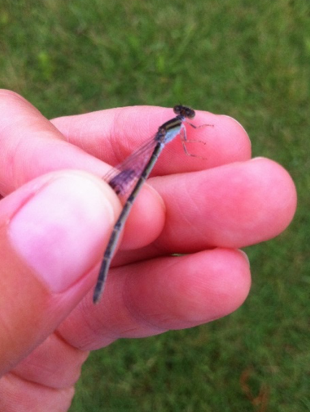
Because damselflies are speciose, have radiated recently, and have complex mating behaviors, damselflies are model organisms for studies of sexual selection and sexual conflict. Most of this work to date operates under the assumption that males use only visual cues to detect and identify mates. Our research was the first to test this assumption in the field, finding that males do not orient to females without visual cues.
How prevalent is Batrachochytrium dendrobatidis (Bd) among amphibians in Southern Oklahoma? (Marhanka et al. 2017)
Batrachochytrium dendrobatidis (Bd, often called chytrid for short) has caused massive declines in amphibian populations worldwide. Research supports that the prevalence and lethality of Bd worldwide is on the rise, due to human-mediated spread of the fungus and warmer global temperatures, respectively. However, despite the threat of this fungus and Oklahoma’s high amphibian biodiversity, only 4 isolated sites had been sampled for Bd in Oklahoma prior to this work. For this project, we sampled 14 sites across Southern Oklahoma for frogs and salamanders. All amphibian families, all sampling locations, and 15/18 species were Bd +, although locations and species differed in their pathogen loads.
Describing a new species of Philippine Slender Skink (Brachymeles bonitae complex) (Davis et al. 2016)
Philippine skinks of the genus Brachymeles are a fascinating group with varying degrees of limb and digit loss that are thought to help them adapt to specific challenges in their environment. Work lead by Dr. Cameron Siler has discovered many cryptic species within Brachymeles, with additional evidence that more cryptic species are present within the B. bonitae complex. This project reports formal description of a new species of fossorial skink within the Brachymeles bonitae complex found on Tablas Island in the Philippines, based on collections made over 50 years ago. This work is near and dear to my heart, as it was the first scientific paper I contributed to. I appreciate Dr. Siler giving me and the other undergraduates on this project an opportunity to publish!